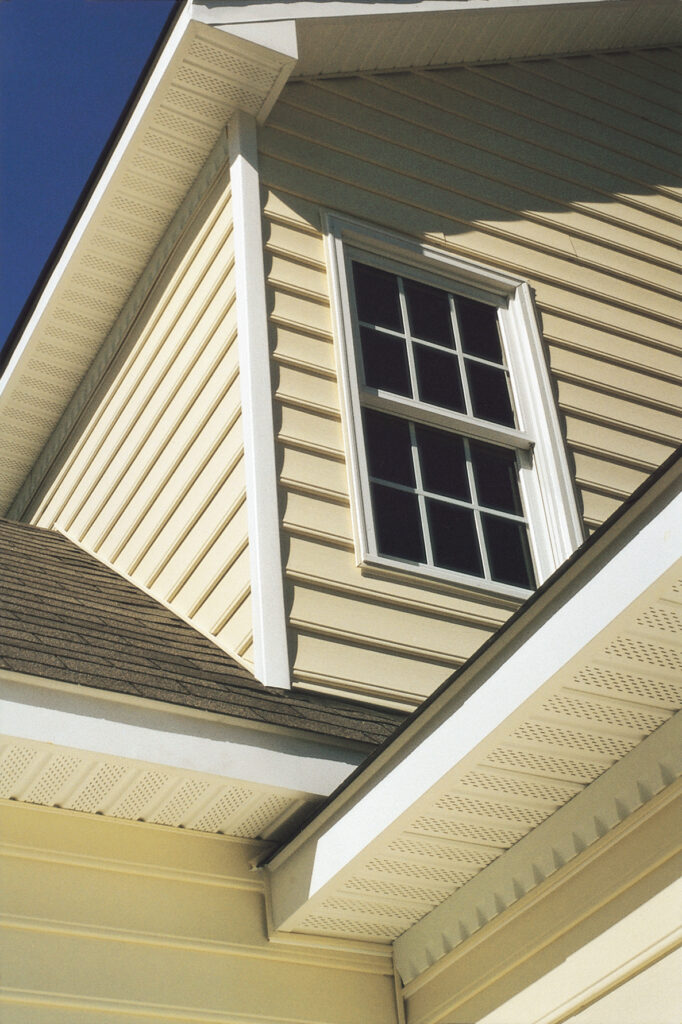
Quick answer: Identify your siding and its current finish before choosing a cleaner. For the products discussed here, manufacturer guidance favors gentle cleaning with a garden hose and a soft cloth or suitable soft brush. Use detergent only as permitted by the relevant care instructions. Do not assume pressure washing is allowed: CertainTeed advises against high-pressure washing, while James Hardie warns that pressure washers can damage its siding. Test an approved method in a discreet area before cleaning more broadly. (certainteed.com)
This guide is for U.S. homeowners planning routine exterior cleaning—not paint stripping, hazardous-material removal or work at height. The examples below explain how to use product documentation rather than offer one cleaning recipe for every house.
1. Identify the siding and the finish before buying cleaner
Start with installation invoices, warranty paperwork, leftover materials and paint records. Your goal is to establish:
- The siding manufacturer and product line.
- Whether the visible surface is the original finish or a later coating.
- The paint or stain product, if applicable.
- The care instructions that apply to that combination.
The distinction matters. James Hardie offers both factory-finished ColorPlus products and siding intended for painting. A painted surface also has its own cleaning requirements: Sherwin-Williams recommends non-abrasive cleaners and checking compatibility in an inconspicuous area. “Fiber cement” or “wood” alone is therefore not a complete cleaning specification. (jameshardie.com)
Make a separate entry for each exterior surface. Vinyl walls, painted wood trim and factory-finished panels should not automatically receive the same treatment.
Practical check: Before buying anything, try to complete this sentence: “My siding is ___, its present finish is ___, and the applicable care guide permits ___.”
If those details remain unknown, ask the manufacturer or a qualified siding or painting professional to help identify a suitable approach. Do not treat a woodgrain pattern as sufficient product identification.
2. Check the cleaner, safety instructions and test area
A cleaner needs to satisfy two separate checks: it must be compatible with the siding finish, and it must be used safely according to its own label.
For a proposed cleaner, check:
| Check | What to establish |
|---|---|
| Surface approval | Does the siding or coating guidance permit this cleaner? |
| Exact formulation | Are the directions for the bottle you actually have? |
| Application | Is hand application required, or is specified equipment allowed? |
| Exposure time | How long may it remain on the surface? |
| Protection | What gloves, eye protection and surrounding-surface precautions are required? |
| Rinsing | How must the treated area and nearby surfaces be rinsed? |
Do not copy a dilution from an unrelated product or older online recipe. Clorox’s outdoor-bleach page distinguishes a newer concentrated formulation and directs users to the product label for complete instructions. Its safety data sheet also identifies skin irritation and serious eye-damage hazards. These are reasons to read the documentation—not a recommendation to use bleach on your siding. (clorox.com)
Never mix bleach with other household cleaners. Clorox warns that toxic fumes can result. (clorox.com)
Once compatibility is established, test a discreet, reachable area. Follow the specified application and rinsing instructions, then inspect it after drying. Stop if the finish changes color or sheen, lifts, or appears damaged. Both Sherwin-Williams and CertainTeed recommend inconspicuous-area testing before broader cleaning. (sherwin-williams.com)
3. Vinyl siding: start gently and check product-specific restrictions
For CertainTeed vinyl or polymer siding, the manufacturer describes hand application of mild soap and water followed by a garden-hose rinse. It also warns that high-pressure washing can damage siding or push water behind the panels. (certainteed.com)
The Vinyl Siding Institute’s installation manual likewise describes garden-hose cleaning and a soft-bristled washing brush. It warns that stiff brushes and abrasive cleaners can change the gloss, leaving a patchy appearance. (vinylsiding.org)
For a documented vinyl product, use this sequence:
- Read its care instructions and inspect the area before wetting it.
- Try the permitted gentle cleaning method on a discreet patch.
- Use an approved soap solution only when needed.
- Rinse as directed and inspect the dry result before continuing.
The common mistake is treating a stubborn mark as permission to scrub harder. Abrasion can change the appearance rather than remove the underlying problem. If the approved method does not work, ask the manufacturer which stain-specific treatment is suitable instead of experimenting with solvents or scouring products. (vinylsiding.org)

4. Factory-finished fiber cement: use the finish’s cleaning bulletin
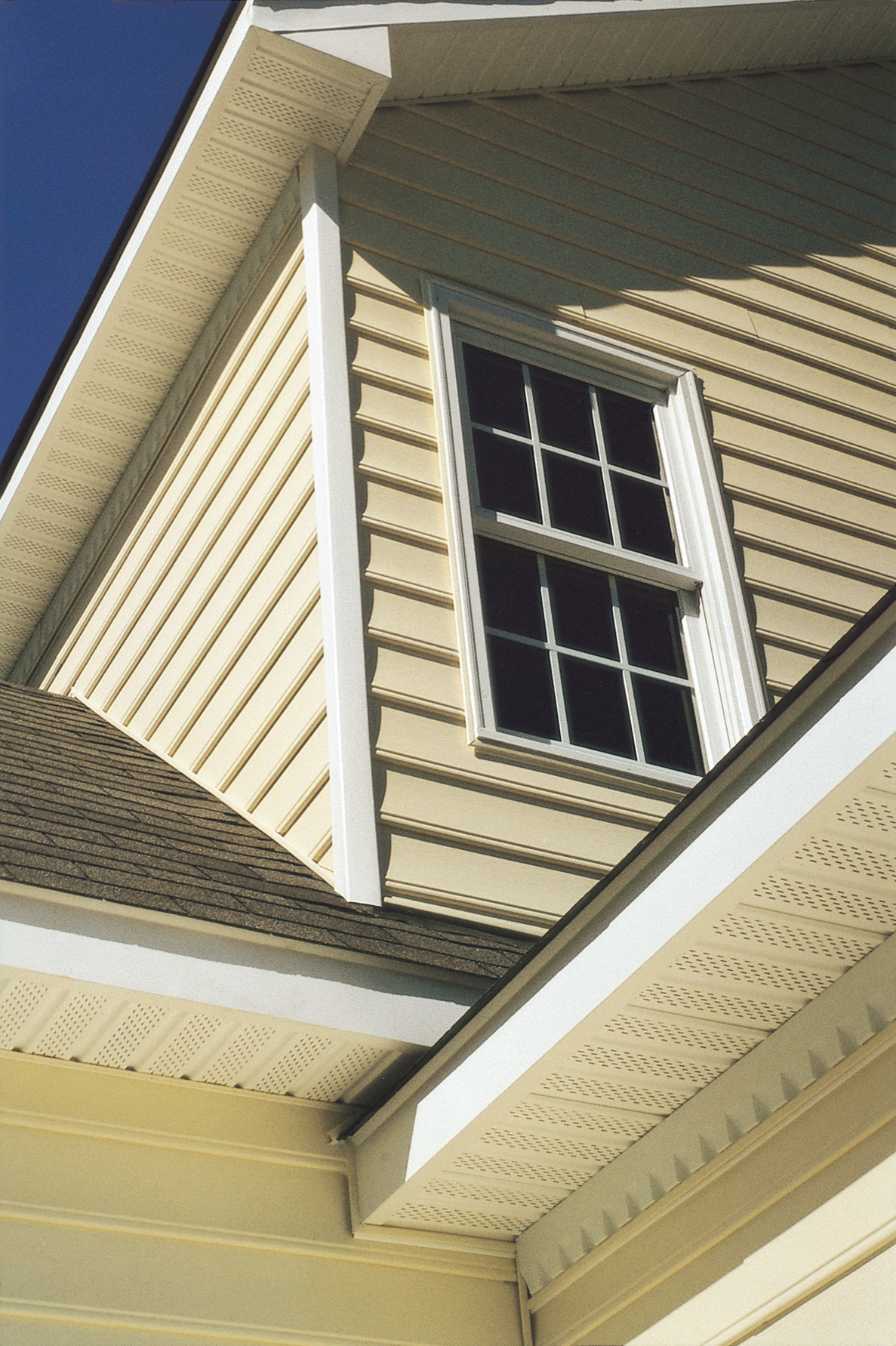
For James Hardie siding with ColorPlus Technology, Technical Bulletin #20 separates ordinary dirt and chalk from oily contamination and mildew. It specifies water and soft tools for dirt and chalk, and mild liquid dishwashing soap with water for oily contamination. Hard brushes and abrasive scrub sponges are excluded. (assets.ctfassets.net)
The bulletin also calls for small sections, gentle movement along the siding and thorough rinsing without allowing soap or mildew cleaner to dry on the finish. It specifies top-down cleaning. These details are a useful reminder to follow the actual product procedure rather than a universal house-washing routine. (assets.ctfassets.net)
James Hardie’s current FAQ recommends a low-pressure garden-hose spray and a suitable siding brush, warning that a pressure washer can damage the surface. (jameshardie.com)
Practical check: Confirm whether the boards still have their original factory finish. If they have been repainted, obtain the coating manufacturer’s cleaning instructions as well.
Do not assume advice for one factory-finished fiber-cement product applies to every manufacturer or subsequent paint coating.
5. Painted wood and engineered wood: distinguish the two
For painted natural wood, identify the coating before selecting a cleaner. Sherwin-Williams’ maintenance guidance says mild soapy water will generally suffice for already-painted surfaces, recommends non-abrasive cleaners and advises avoiding ammoniated products on waterborne paint. It also requires an inconspicuous-area test. This is general coating guidance, not approval for every painted wood exterior. (sherwin-williams.com)
Do not confuse routine washing with preparation for repainting. Ask specifically for maintenance-cleaning directions if your aim is to preserve the existing finish.
For LP SmartSide engineered wood, the supplied manufacturer care guidance recommends a cloth, sponge or soft brush with mild detergent and water, followed by a garden-hose rinse. LP advises against pressure washing because it can cause moisture intrusion, discoloration and paint damage. Its guidance also recommends checking for cracks, leaks and wear, and keeping sprinklers from wetting the siding. Source: LP SmartSide care and maintenance guidance.
Common mistake: Assuming engineered wood and natural wood are interchangeable cleaning categories. Follow the documented siding instructions and the applicable finish guidance; ask for clarification if they appear inconsistent.
6. Pressure washing and “soft washing”: request the actual method
A service name is not a cleaning specification. If a contractor proposes pressure washing or “soft washing,” ask for the equipment, cleaner, application method and rinsing procedure—not just a reassuring label.
There is no single pressure setting that this guide can approve for every siding product. CertainTeed warns against high-pressure washing, James Hardie recommends a garden-hose approach, and LP advises avoiding pressure washers on SmartSide. (certainteed.com) LP source.
Before authorizing professional cleaning, request a written scope identifying:
- The siding and finish being cleaned.
- The manufacturer guidance supporting the method.
- The exact cleaner and its application instructions.
- A test-area approval step.
- Protection for nearby surfaces and landscaping.
- Conditions that will make the crew stop.
Also check the cleaner’s equipment restrictions. For example, the manufacturer-published SmartLabel instructions for one specific Clorox Pro Results Outdoor Bleach product prohibit use in pressure washers or hose-end sprayers. That restriction should not be generalized to other formulations—but it shows why equipment approval and surface approval are separate questions. (smartlabel.labelinsight.com)
Keep homeowner cleaning within safely reachable ground-level areas. Leave work requiring ladders, roof access or other work at height to appropriately qualified professionals.
7. Know when staining needs assessment, not stronger cleaning
A dark mark does not, by itself, establish its cause. James Hardie notes that mildew discoloration can resemble dirt. Its cleaning bulletin separates treatments accordingly; it does not support identifying every stain from appearance alone. (assets.ctfassets.net)
Pause cleaning and request assessment when you notice:
- Cracks, warping or gaps.
- Peeling paint or visibly deteriorated surfaces.
- Staining that repeatedly returns near a leak or persistently wet area.
- Water appearing indoors during exterior washing.
- A test patch that changes the finish.
CertainTeed specifically recommends checking for cracks, warping and gaps around openings. LP’s care guidance calls for inspecting leaks and wear and correcting ongoing water exposure. (certainteed.com) LP source.
Recurring growth associated with a building moisture problem needs more than cosmetic treatment. EPA’s residential mold guidance emphasizes correcting the water problem as well as cleaning affected areas. That principle does not diagnose an exterior stain or prove damage inside the wall. (epa.gov)
For older painted siding, avoid cleaning that removes paint until potential lead hazards have been assessed. U.S. homes built before 1978 may contain lead-based paint; EPA recommends qualified testing and lead-safe professionals for relevant renovation work. (epa.gov)
8. Worked example: make three cleaning decisions on one house
Consider a hypothetical home with documented CertainTeed vinyl walls, ColorPlus fiber-cement accents and painted wood trim.
| Surface | Decision supported by the guidance |
|---|---|
| Vinyl walls with ordinary grime | Test mild soap and water applied by hand, then rinse with a garden hose. |
| ColorPlus accents with loose dirt | Begin with the bulletin’s water-and-soft-tool method rather than automatically adding cleaner. |
| Painted wood trim | Identify the paint and confirm its maintenance instructions before testing a non-abrasive cleaning method. |
These decisions come from separate manufacturer instructions; they are not a report of tested results on a real house. (certainteed.com)
A useful job plan would record the product, finish, approved cleaner, method, test result and stop conditions for each surface. If the trim’s paint remains unidentified, leave it out of the cleaning scope until that question is resolved.
Before proceeding, ask: Do I know what I am cleaning, what is permitted, and what would make me stop? A successful maintenance wash should preserve the finish—not pursue a perfectly uniform appearance through progressively stronger chemicals or more aggressive equipment.
Read next: Siding Warranties Explained: Product Coverage, Labor and Common Limits