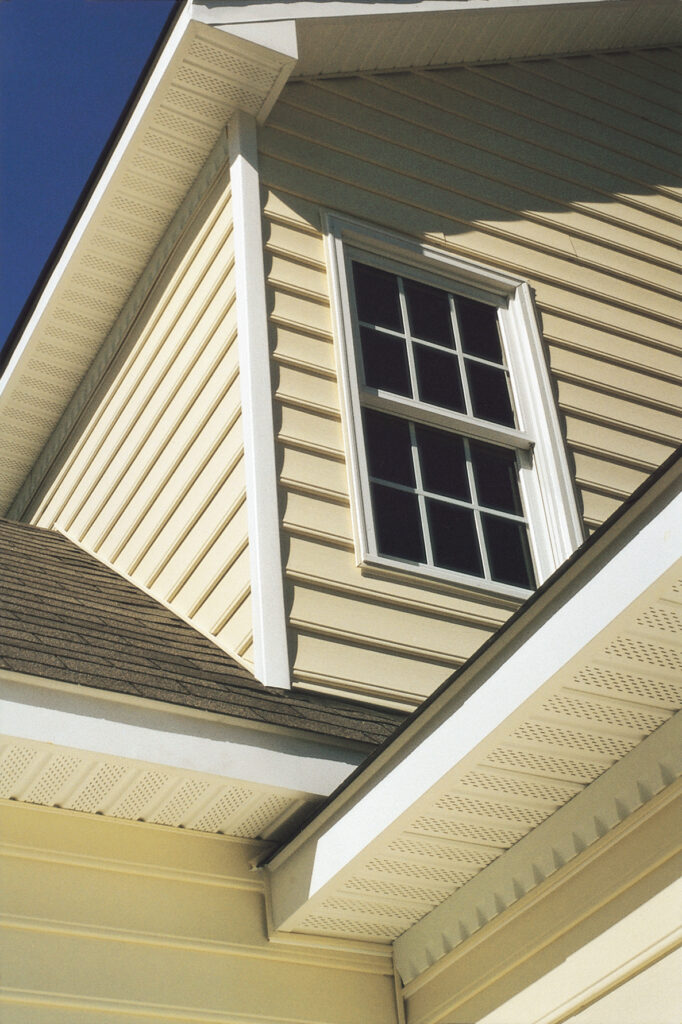
Quick answer: Shortlist siding by the maintenance you will accept, the appearance you want and the installation requirements for your home—not purchase price alone. Compare exact products and finishes, rather than assuming every product in a material category performs alike. Whatever you choose, the wall still needs effective drainage and flashing behind the siding. (basc.pnnl.gov)
This guide is for U.S. homeowners comparing replacement proposals. Use it to narrow your choices and ask better questions; product instructions and a project-specific assessment must determine the final installation details.
1. Compare the wall system before comparing the siding
Siding is the visible outer covering, not the entire weather-protection system. Water can get behind cladding through joints, edges and penetrations. A water-resistive barrier, or WRB, provides a drainage surface behind it, while properly integrated flashing directs water away at windows, doors and other interruptions. (basc.pnnl.gov)
That distinction matters when comparing proposals. A more appealing siding product does not resolve an inadequate drainage detail. Before choosing a material, ask each contractor:
- What is the proposed WRB?
- How will it connect to window, door and roof-to-wall flashing?
- Does this assembly need furring or another drainage-space detail?
- What existing conditions must be assessed before the wall is covered?
Those questions follow the Building America Solution Center’s emphasis on continuous drainage, integrated flashing and inspection of underlying sheathing during replacement. (basc.pnnl.gov)
Treat insulation as a separate comparison, too. Insulated siding can add thermal resistance, but its product R-value is not a promise of whole-house energy savings. Ask how the proposed insulation fits the existing wall rather than comparing siding labels alone. (basc.pnnl.gov)
2. Vinyl and insulated vinyl: check movement, trim and insulation details
Consider vinyl if avoiding routine repainting is a priority. For example, Polaris markets its HomeView vinyl siding as requiring no painting. That is different from requiring no care: the industry installation manual includes cleaning guidance and stresses correct installation. (polarissiding.com)
Vinyl expands and contracts with temperature changes. Its installation must allow movement; fastening that prevents movement can cause visible problems. The Vinyl Siding Institute also notes that an uneven underlying surface may require preparation or furring. (vinylsiding.org)
Ask to see a sample that includes the proposed corner and window trim—not just a small panel. Decide whether you like the complete appearance before approving the proposal.
Insulated vinyl is a distinct option. It combines vinyl siding with permanently attached rigid foam backing, commonly expanded polystyrene. Building America explains that it adds thermal resistance across framing members, reducing thermal bridging. It still requires appropriate water management and product-specific installation. (basc.pnnl.gov)
For either version, request:
- The exact product and profile.
- The applicable wind-performance documentation.
- The installation instructions for that product.
- For insulated vinyl, the tested R-value and proposed opening details.
Do not assume a material name establishes suitability for a high-wind site; selection and attachment both matter. (vinylsiding.org)
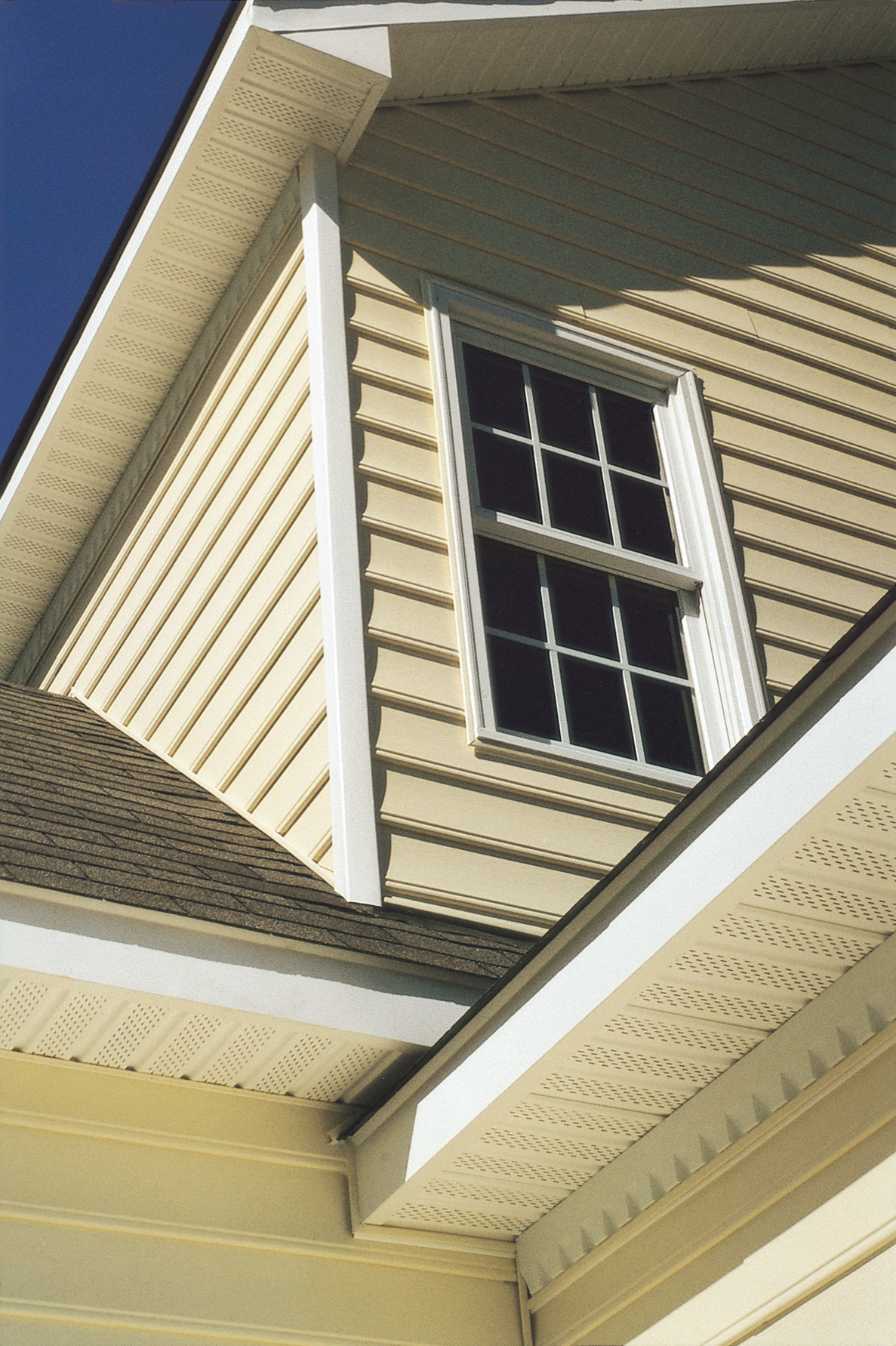

3. Fiber cement: separate the board from its finish
Consider fiber cement when its available profiles and painted appearance suit your design. James Hardie, for example, offers primed products for painting and products with its factory-applied ColorPlus finish. Those are different finishing scopes, even though both use fiber-cement siding. (jameshardie.com)
Ask whether a proposal includes factory-finished boards, field painting or only primed material. Also request the requirements for cut-edge treatment, touch-up and future refinishing. Do not interpret a material warranty as a repainting schedule.
Installation details deserve equal attention. James Hardie’s HZ10 quick-start guide illustrates clearances, field-joint flashing and locations that must not be caulked. It explicitly says the guide does not replace complete instructions applicable to the jobsite. These details should not be generalized to every fiber-cement product or location. (assets.ctfassets.net)
Fiber cement also needs cleaning. James Hardie recommends a garden hose and a soft or medium-bristle siding brush, and warns that pressure washing can damage its siding surface. (jameshardie.com)
Practical check: Ask the contractor to identify the actual installation document being followed and explain how the proposal handles flashing, clearances and finishing—not simply state “installed to manufacturer specifications.”
4. Engineered wood: look closely at exposed edges and water exposure
Consider engineered wood if the selected product’s appearance and finishing options fit your plans. Then examine its installation requirements as carefully as its face texture.
LP SmartSide lap-siding instructions, for example, require exposed wood substrate and field cuts to be sealed. They also address clearances, flashing and WRB integration. These are specific requirements, not optional cosmetic extras. (lpcorp.com)
Before accepting a proposal, ask:
- Who seals exposed cuts and edges?
- Which finishing products will be used?
- How are butt joints handled for this exact siding?
- How will required clearance above soil, roofs and paved surfaces be maintained?
Use the answers to compare scope, rather than assuming all engineered-wood products have identical joint or coating details. (lpcorp.com)
For maintenance, LP recommends at least an annual visual inspection and cleaning with mild detergent, a cloth, sponge or soft brush, followed by a garden-hose rinse. It advises against pressure washing. LP also warns that ongoing water contact can shorten paint life and encourage fungus and mildew, so gutters and sprinkler direction belong in the maintenance plan. (lpcorp.com)
A factory-finished surface does not remove the need to manage water around the house.
5. Natural wood: choose the finish along with the species
Consider natural wood when real grain and the chosen wood’s appearance are central to the project. Do not leave the finish decision until after selecting the siding.
For western red cedar, the Western Red Cedar Lumber Association describes several approaches: paint and solid-color stains, semi-transparent stains, transparent finishes, and weathering products. These produce different appearances and have different maintenance implications. This cedar guidance should not be applied automatically to every wood species. (realcedar.com)
Ask for a sample showing the actual species, surface texture and finish. A photograph of stained cedar does not establish what another species or coating will look like on your home.
Also ask what maintaining that appearance involves. The association states that exterior cedar finishes require regular cleaning and maintenance, with the amount depending on climate, finish and use. It notes that simply restaining does not solve an existing mildew problem. (realcedar.com)
Practical check: Discuss the desired future appearance as well as the installation-day appearance. Are you trying to retain a freshly stained color, maintain an opaque coating or achieve a weathered look? Specify that goal before requesting comparable finishing proposals.
6. Metal: specify the panel, coating and compatible components
Consider metal when the proposed panel profile and finish fit the house. But “metal siding” is not a complete specification. Ask the supplier to identify the base metal, protective coating, exposed finish, fastening system and compatible trim.
Coated metal still needs care. MBCI’s building-maintenance manual explains that its roof and wall finishes require a maintenance program. It also calls for removing installation shavings that could corrode and stain panel surfaces. Its guidance warns against contact with, or runoff from, incompatible dissimilar metals. (mbci.com)
For a coastal property, request written confirmation that the proposed panel system and finish are appropriate for the exposure. Include fasteners and accessories in that review. FEMA explains that salt spray, moisture and humidity can contribute to connector and fastener corrosion in coastal structures. (fema.gov)
Ask how a damaged panel would be replaced and whether replacement requires disturbing adjacent panels or trim. That question helps turn a broad durability claim into a practical repair discussion.
Do not equate a factory coating with zero cleaning, unrestricted exposure or an unlimited finish warranty.
7. Test your shortlist against three real-world priorities
The following are illustrative decision scenarios, not findings about a particular property.
A coastal home
Begin with documented exposure suitability, wind requirements and compatible fasteners—not a preferred material. Building America advises selecting products rated for coastal or high-wind conditions and following the relevant attachment requirements. Several siding types can perform well in high winds when appropriately selected and installed; the category alone does not settle the choice. (basc.pnnl.gov)
A sensible shortlist therefore keeps only products whose suppliers and installers can explain the complete proposed assembly.
A shaded property: a worked decision example
Suppose your priorities are a wood-look exterior and manageable upkeep, and you are comparing factory-finished fiber cement, engineered wood and stained cedar.
Work through the decision in this order:
- Confirm the appearance. Review full samples and trim details; eliminate options you do not like.
- Check water management. Have the contractor assess drainage and flashing before treating the issue as a material choice. (basc.pnnl.gov)
- Compare the care instructions. Hardie recommends low-pressure cleaning; LP adds checks for persistent water contact; cedar guidance requires finish maintenance and attention to discoloration. (jameshardie.com)
- Choose the obligation you will actually accept. If retaining a particular stained-wood appearance is essential, include that maintenance commitment in the decision. If it is not, compare the finished alternatives on appearance and documented care requirements.
The result is a defensible shortlist—not an unsupported claim that one material prevents every moisture or staining problem.
An owner seeking less frequent repainting
Put no-routine-paint vinyl products on the shortlist, then compare them with factory-finished alternatives. Distinguish “painting is not required” from “this product arrives painted.” For coated products, request the actual care and finish-warranty documents rather than inferring a repainting interval from advertising. (polarissiding.com)
8. Compare complete proposals and avoid common shortcuts
Use one comparison sheet for every bidder. Request the same information so that a lower total does not simply reflect a narrower scope:
| Proposal item | What to request |
|---|---|
| Product | Manufacturer, product line, profile and finish |
| Quantity | Measured wall area and measurement assumptions |
| Existing siding | Removal, disposal and any retained layers |
| Water management | WRB, flashing and drainage details |
| Installation | Applicable instructions and attachment approach |
| Finish work | Painting, exposed-edge treatment and touch-up |
| Uncertain conditions | Written process for concealed-damage changes |
| Ownership | Care instructions and separate warranty documents |
Avoid these shortcuts:
- Comparing panel prices instead of completed replacement scopes.
- Assuming every gap should be caulked. Some product details deliberately prohibit caulk so drainage remains open. (assets.ctfassets.net)
- Using one cleaning method on every material. Hardie and LP both warn against pressure washing their cited siding products. (jameshardie.com)
- Treating a wind claim as independent of installation. Attachment and product selection must match the application. (basc.pnnl.gov)
Your final choice should be an exact product, finish and installation scope that fits your house and your willingness to maintain it. Keep unresolved exposure, detailing and warranty questions open until the appropriate manufacturer, contractor or design professional answers them.